


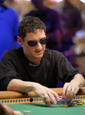
Interview of Perry Friedman
Jon Eaton
September 2nd, 2005
Full Name: Perry Friedman
Nickname: The Baiter
Online Handle: Perry Friedman
Date Of Birth: 5/15/1968
Place Of Birth: Brooklyn, NY
Now Resides: San Marcos, CA
Favorite Poker Game: Seven card stud
Started Playing Poker: I started playing poker as a young kid. Just the other day, I was looking back at some old pictures from my last day in high school and found a picture of me playing cards! I played a lot of poker in college with a group of guys that eventually became the Tiltboys. My first tournament (and first experience playing poker in a casino) was at BARGE in 1996 and first WSOP was in 1999.
Major Accomplishments: 2002 WSOP $1,500 Omaha Hi-Lo Champion, four other WSOP final tables, and the 2004 WPT Legends Of Poker final table.
Q: You played exceptionally well and had a great third place finish in the $2k no-limit event at the World Series. The final table was one of the toughest of the series. What was your strategy going into the final day?
A: My strategy was to continue to play tight, but aggressive. I was willing to wait and pick my spots because I was not dangerously short stacked and I felt I had time and chips enough to play.
Q: Was there any point during early play that you thought you would make a run to the final table?
A: I cracked aces pretty early with tens (which I repeated at the final table). I felt that I was playing well throughout the tourney, but over a three day event like that, you need to just be patient and take it one step at a time. My first goal is to make the money, then it's to make the final table, then it's to win the tournament. You can't win the tournament on the first day, but you can lose it. I feel like you need to just take baby steps and accomplish what you can at any given stage, while of course always looking at the ultimate goal.
Q: You're a part of the Full Tilt team, which features some of the best players in the world. You had to face off with Seidel in the $2k NL event. If you were playing for the WSOP main event title, which one Full Tilt'er would you LEAST want to face?
A: Phil Ivey.
Q: Besides your 2002 WSOP bracelet, what is your most memorable poker tournament and why?
A: My 2004 final table is certainly way up there. It was a very large tournament (1403 players) and I had to play very well against a lot of top players to get where I did. It was also my first televised final table and that will always be memorable.
Q: How did Full Tilt Poker come together? Who was the leading role in making it happen?
A: Chris Ferguson and Ray Bitar were the driving forces behind creating Full Tilt Poker. The idea had been simmering for a while, and I was first approached by Chris way back in 2002, shortly after I had won my WSOP bracelet. It's been an amazing adventure, and I have been there from the start. I was the first employee of Tiltware, the company that creates the software and does the marketing for Full Tilt Poker. I helped design the game software from the ground up and I am extremely proud of what we have put together.
Q: As someone who plays a lot of online poker, as well as being a part of Full Tilt, what are some of the major issues of online poker that concern you? What do you think could be done to help fix those problems?
A: My biggest concern about online poker is the continued fuzzy legal status it has in the US. The government won't say it's illegal, but it also won't say it's legal. There have been many positive rulings lately in support of online poker, but I wish the government would just come to it's senses and embrace it, and start taxing it like any other business.
Q: As for live tournament play, what problems do you see currently in the poker industry that need to be addressed? What could be done to help fix them?
A: The biggest problems in the industry are lack of standards and the lack of giveback to the players. The WPT has taken a big step forward by finally allowing players to wear logos. Right now, the WPT and WSOP are getting tremendous value out of their coverage of their events, but the players are left to fight for themselves to benefit indirectly. I'd like to see poker become more like the PGA or other organized sports, and allow the participants to share in the tremendous revenue that they bring in for the casinos that host the tournaments and the networks that cover them.
Q: Finally, what were your overall impressions of the 2005 WSOP at the Rio? What was done right, what was done wrong?
A: There were a lot of positives and negatives. I think given the large turnout, things went relatively smoothly. My biggest complaint was that all the tournaments should start on time. There is no need to wait for players to get registered and get to their sites. One thing Matt Savage did for the WSOP when he was tournament director was that he made sure every tournament started right on time.
